
The Language of the Wind: Unlocking the Mystical Five Elements of Tibetan Prayer Flags
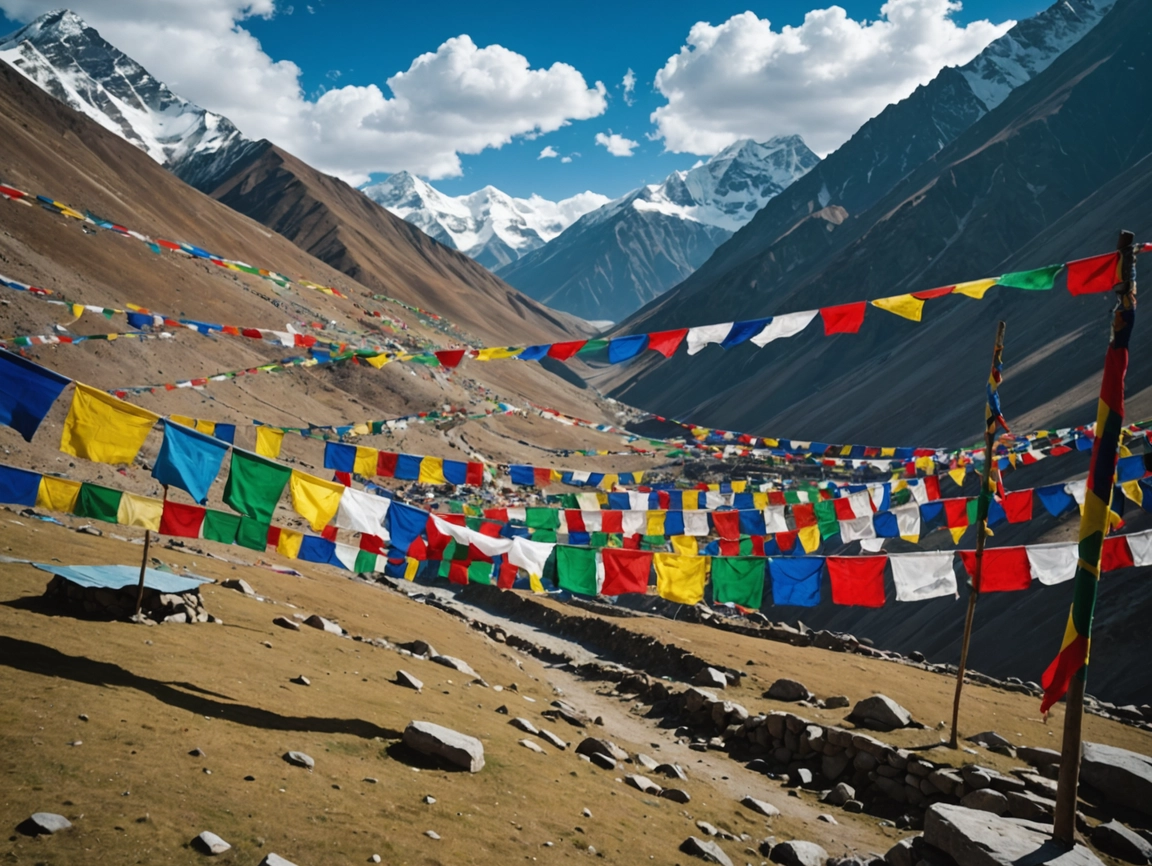
High in the Himalayas, where the air grows thin and the earth meets the sky, a silent ritual unfolds with every gust of wind. Whether you are trekking to Everest Base Camp or walking the serene kora around Kathmandu’s Boudhanath Stupa, you are surrounded by vibrant cascades of color.
These are Lungta—Tibetan prayer flags. While they have become a global symbol of peace and mindfulness, their presence in Nepal is rooted in an ancient, sophisticated understanding of the universe. To look at a prayer flag is to look at a map of existence itself, encoded through the Five Elements.
The Philosophy of Impermanence
The most profound lesson of the Tibetan prayer flag is impermanence. As the harsh Himalayan sun fades the colors and the wind tears the fabric to threads, the flag serves as a reminder that nothing in the physical world lasts forever. The beauty lies in the act of letting go—sending the prayers out until the cloth itself returns to the elements it represents.
The Origin: Why We Hang the “Wind Horse”
In Tibetan, prayer flags are called Lungta. Lung means wind, and Ta means horse. The name refers to the mythical “Wind Horse” often printed at the center of the flags, carrying the “Three Flaming Jewels” of Buddhism on its back.
The philosophy is beautiful in its simplicity: The prayers and mantras printed on the cloth are not intended to carry messages to a deity. Instead, the wind “reads” the prayers and carries their vibrations across the landscape. As the flags fade and fray, it is believed that the blessings are becoming a permanent part of the universe, and the old energy is being replaced by new intentions.
The Sacred Order: The Five Elements
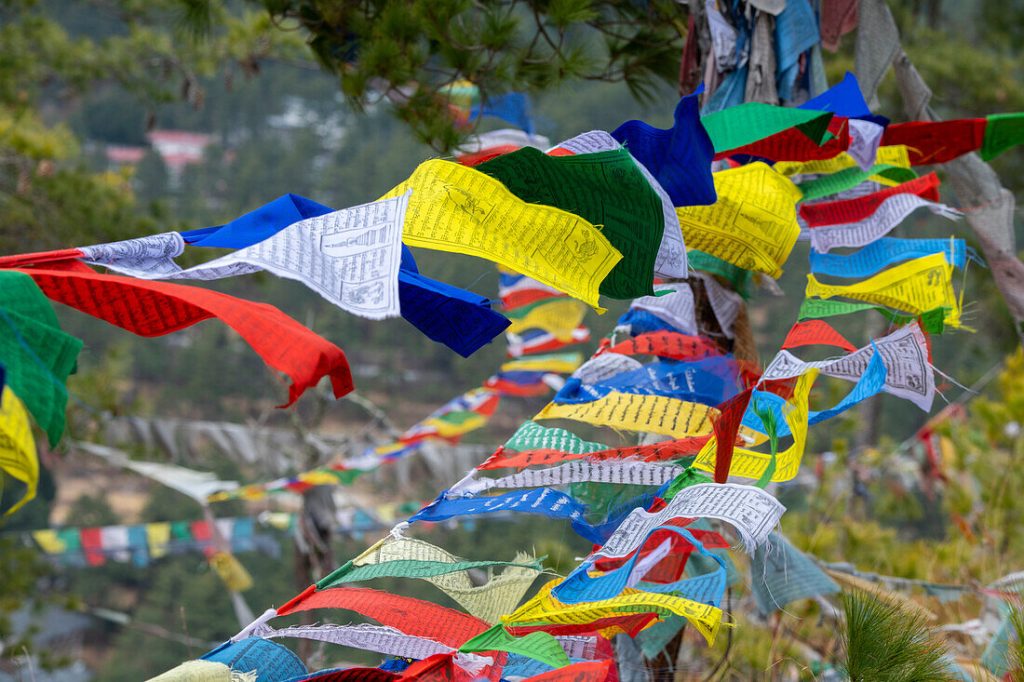
If you look closely at a string of prayer flags (known as Darchog), you will notice they always follow a specific, unchanging order from left to right: Blue, White, Red, Green, and Yellow. This sequence represents the balance of the Five Elements, which Tibetan medicine and cosmology believe are the building blocks of both the physical world and the human body. When these elements are in harmony, there is health and peace; when they are out of balance, there is chaos and suffering.
1. Blue: Sky and Space (Akasha)
The sequence always begins with Blue. It represents the vastness of the sky and the element of Space. In a spiritual sense, space is the “container” for everything else. Without space, the other four elements have no room to exist.
- Symbolism: Pure consciousness, infinity, and the potential for all things.
- Health: In traditional healing, blue relates to the mind and the ability to remain calm and expansive.
2. White: Air and Wind (Vayu)
Next is White, representing Air. This is the element of movement and breath. Just as the wind moves the flags, the air element moves energy through our bodies.
- Symbolism: Purity, cutting through ignorance, and the vital breath (Prana or Qi).
- Spiritual Meaning: White signifies the “unclouded” mind, free from the “clouds” of negative emotions.
3. Red: Fire (Agni)
The vibrant Red stands for Fire. Fire is the element of transformation. It provides the heat necessary for life and the light necessary for sight.
- Symbolism: Vitality, passion, and the “inner heat” that burns away delusions.
- The Sun: It represents the warmth of the sun that allows crops to grow and sustains the cycle of life in the harsh Himalayan climate.
4. Green: Water (Ap)
Green represents the element of Water. While we often associate green with plants, in this tradition, it represents the life-giving properties of water that allow the natural world to flourish.
- Symbolism: Flexibility, flow, and healing.
- Spiritual Meaning: Just as water conforms to the shape of its container, green represents the ability to adapt and overcome obstacles through gentleness rather than force.
5. Yellow: Earth (Prithvi)
The sequence concludes with Yellow, representing Earth. This is the foundation. It provides the grounding and stability needed to manifest spiritual growth in the physical world.
- Symbolism: Solidness, nourishment, and the harvest.
- Spiritual Meaning: Yellow represents the “Golden Ground”—the realization that the mundane world and the spiritual world are not separate.
Anatomy of a Prayer Flag: What’s written on the Cloth?
Beyond the colors, the flags are densely packed with symbols and sacred texts. Understanding these helps one appreciate the depth of the “messages” being sent out into the wind.
The Four Dignities
In the four corners of many flags, you will find four animals known as the “Four Dignities.” They represent the qualities a person must cultivate on the path to enlightenment:
- The Garuda (Top Left): Wisdom and fearlessness.
- The Dragon (Top Right): Gentle power and creative energy.
- The Snow Lion (Bottom Left): Joy and a clear, vibrant mind.
- The Tiger (Bottom Right): Confidence and disciplined focus.
Ritual and Respect: How to Handle Prayer Flags
In Nepal, prayer flags are treated as sacred objects. They are not merely decorations; they are living prayers. If you plan to hang them or bring them home as a memento of your travels, there are several traditional “rules” to follow:
- Never Touch the Ground: Because they contain sacred mantras, it is considered highly disrespectful to let flags touch the floor or ground.
- Hang with Intention: Flags should be hung with a selfless mind. The tradition suggests that if you hang them hoping only to benefit yourself, the merit is lost. They are hung for the benefit of “all sentient beings.”
- The Timing Matters: According to the Tibetan calendar, there are “auspicious” and “inauspicious” days to hang flags. Hanging them on a day with bad astrological alignment is said to bring obstacles rather than blessings. Sunny, windy days are generally preferred.
- The Final Act: When flags become old and faded, they should not be thrown in the trash. Instead, they should be burned with respect. This allows the smoke to carry the final remnants of the prayers back to the heavens, completing the cycle of the elements.
- The Mantras
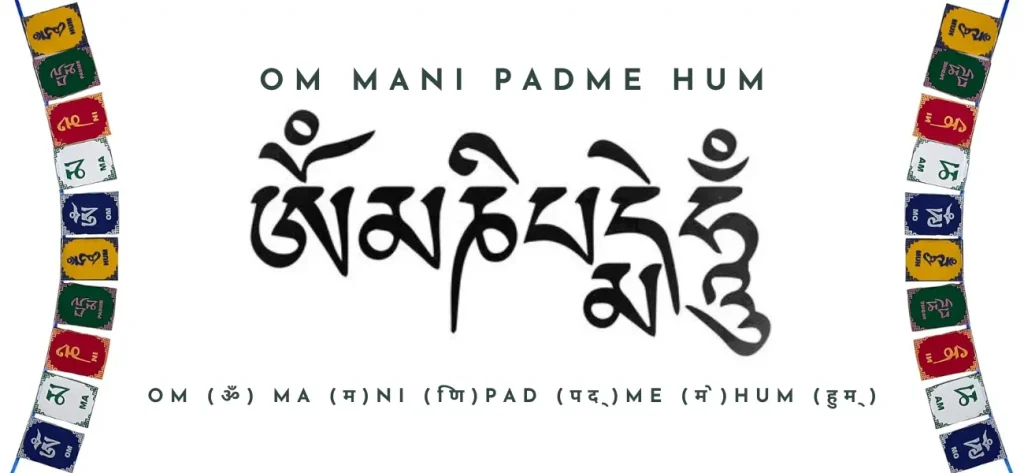
The mantra “Om Mani Padme Hum” is the heartbeat of Tibetan Buddhism and the spiritual engine behind the prayer flags fluttering across the Kathmandu Valley and the high Himalayan passes. While it is often simplified in Western translation as “The Jewel is in the Lotus,” its depth in the Newar and Tibetan traditions of Nepal is far more profound, functioning as a multi-layered roadmap to enlightenment.
To understand why this mantra is printed thousands of times on a single string of flags, one must look at the synergy of its six syllables, each corresponding to the transformation of a specific human failing.
The Prayer Flags of Nepal: A Living Landscape
In the high-altitude theaters of the Himalayas, where the air is thin and the silence is profound,there is a constant,rhythmic sound: the frantic,snapping flutter of fabric against the wind. These are the Dar Cho-the prayer flags of Nepal. To the uninitiated traveleer,they are a vibrant aesthetic choice,a splash of primary colors against the monochrome of granite and snow.but to the people of the Himalayas,they are the very lungs of the landscape,inhaling the physical world and exhaling the spiritual.
In Kathmandu, you will see them strung from the gilded spires of Swayambhunath (the Monkey Temple), creating a canopy of color that vibrates with the chanting of monks. In the Everest Region, you will see them weighted down by stones on “Labtsa” (mountain passes), placed there by Sherpas to thank the mountain deities for a safe passage.
They serve as a constant reminder of impermanence. The sun bleaches the red to a pale pink; the rain washes the ink into the soil; the wind tears the fabric into threads. In the West, we might see this as “wear and tear.” In the Himalayas, this is the goal. The fading of the flag is the physical evidence that the prayers have been successfully released.
Conclusion: Bringing the Elements Home
The Tibetan prayer flag is more than a souvenir; it is a lesson in interconnectedness.It remind us that we are not seperate from our environment. The Tibetan prayer flag is a profound lesson in interconnectedness. By understanding the five elements—Space, Air, Fire, Water, and Earth—we realize that we are made of the same materials as the stars and the mountains.
Next time you see these flags fluttering against a deep blue Himalayan sky, remember that they are more than just fabric. They are a silent symphony of the elements, a “Wind Horse” galloping across the world to bring a little more peace, one gust at a time.
Journey with Shangri-La Voyages
Understanding the depth of Nepal’s cultue is the difference between being a tourist and being a traveler. At Shangri-La Voyages we dont just show you the mountains ; we introduce you to the spirit that lives within them. Wheather you are trekking to the base of Everest or exploring the hidden courtyard of Patan,we help you connect with the living landscape of the Himalayas.